
How People Traveled Long Distances 1000 Years Ago
About 1,000 years ago, traveling long distances was very different from traveling today. There were no cars, trains, airplanes, or highways. Most journeys were slow, difficult, and sometimes dangerous. However, people still traveled surprisingly far for trade, war, religion, exploration, work, and family. They used the natural landscape, animals, boats, and simple roads to get from one place to another.
For most people, walking was the most common way to travel. Farmers, merchants, soldiers, pilgrims, and ordinary travelers could walk for many miles, although long journeys could take weeks or even months. People usually followed dirt paths, tracks, and ancient roads. Some roads had been built by earlier civilizations and were still being used. Travelers often planned their journeys around places where they could find food, water, and somewhere safe to sleep.
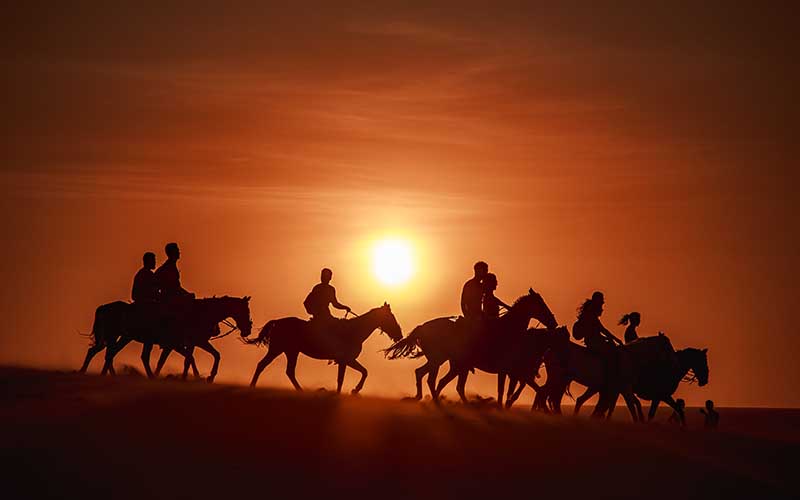
Horses were extremely important for long-distance travel. A person riding a horse could travel much faster than someone walking, making horses especially valuable for messengers, soldiers, wealthy travelers, and merchants. Horses could also carry supplies, clothing, food, and other goods. In some regions, people used donkeys, mules, oxen, and camels instead. Camels were particularly useful in deserts because they could travel long distances with limited water.
Traveling by land could be uncomfortable and dangerous. Roads were often muddy after rain and could become difficult to use during winter. Rivers, mountains, forests, and deserts created major obstacles. Travelers also had to worry about bandits and thieves. A person traveling alone could be vulnerable, so merchants and pilgrims sometimes traveled in groups for protection. Soldiers could also be sent to protect important roads and trade routes.
Ships and boats were another major form of long-distance transportation. In many cases, traveling by water was much faster and easier than traveling over land. Rivers provided natural highways, allowing people and goods to move between settlements. Large sailing ships could also cross seas and oceans. Vikings, for example, used advanced wooden ships to travel across the North Atlantic and along European coasts. Their ships allowed them to reach places such as Iceland and Greenland and to travel along rivers deep into Europe.
Other civilizations also developed important sea routes. Merchants in the Mediterranean, Indian Ocean, and parts of Asia regularly traveled between distant ports. They transported valuable goods such as spices, silk, metals, precious stones, textiles, and food. Sailors had to understand winds, currents, coastlines, and the stars. Without modern maps, GPS, or electronic navigation, experienced sailors relied heavily on their knowledge of the natural world.
Trade was one of the biggest reasons people traveled long distances. Around 1,000 years ago, different regions produced different goods, creating opportunities for merchants. Traders traveled along routes connecting Europe, the Middle East, Africa, and Asia. The Silk Roads, for example, were not a single road but a large network of routes. Merchants could travel enormous distances by moving from one trading center to another and exchanging goods along the way.
Religion also encouraged long-distance travel. Pilgrims traveled to important religious sites, sometimes covering hundreds or thousands of miles. These journeys could be physically demanding, but they were considered extremely important. Pilgrims often traveled in groups and depended on religious houses, inns, villages, and other settlements for food and shelter.
Travel was also important for war and politics. Armies sometimes marched hundreds of miles to attack enemies or defend territories. Kings and rulers needed messengers to carry information between distant parts of their kingdoms. Since messages could only travel as quickly as the messenger, important news could take days or weeks to arrive. This meant that rulers often had to make decisions without knowing exactly what was happening far away.
One of the biggest differences between travel then and travel today was time. A journey that takes a few hours today could take weeks 1,000 years ago. Travelers had to be patient and prepared for unexpected delays. They needed food, water, warm clothing, tools, money, and sometimes weapons for protection. They also had to depend on the people and settlements they encountered along the way.
Despite these difficulties, people in the medieval world were far from isolated. Merchants, sailors, soldiers, pilgrims, explorers, and messengers connected communities across enormous distances. Ideas, languages, religions, technologies, and goods traveled with them. Long-distance travel helped different societies influence one another and contributed to the development of trade networks and major cities.
Traveling 1,000 years ago was slow, challenging, and sometimes dangerous, but people developed many effective ways to cross great distances. They walked, rode horses and other animals, traveled by river and sea, and followed networks of roads and trade routes. Although their journeys took much longer than ours, their determination to travel allowed people and cultures separated by thousands of miles to communicate, trade, and interact with one another.