

Life on Earth 100 Years from Now: A Glimpse into 2126
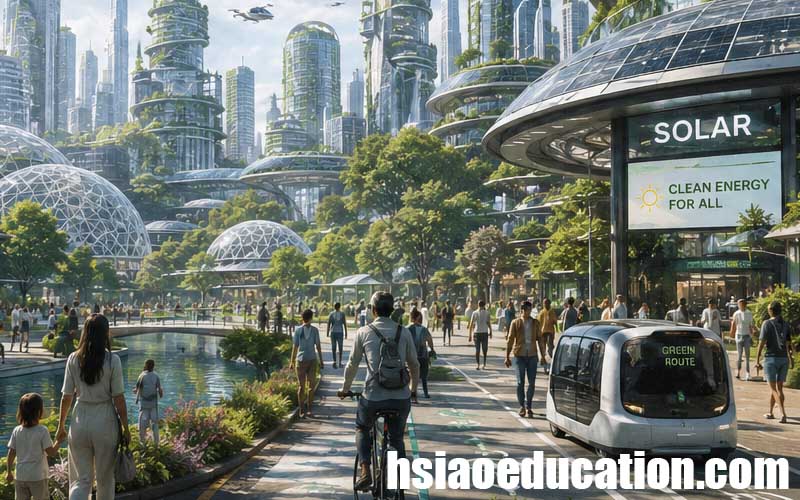
No one can predict the future with certainty, but if humanity continues to innovate while learning from today’s environmental and social challenges, life on Earth a century from now could be remarkably different. The year 2126 may be defined not only by extraordinary technological progress but also by a renewed commitment to living in harmony with the planet.
Cities of the future are likely to be greener, smarter, and more sustainable. Towering skyscrapers may be covered with living plants that naturally cool buildings, improve air quality, and provide habitats for birds and insects. Roads filled with gasoline-powered cars could become a thing of the past, replaced by autonomous electric vehicles, magnetic levitation transit systems, and even short-distance flying taxis. Artificial intelligence will likely manage traffic, energy distribution, and public services, making cities cleaner, quieter, and far more efficient than they are today.
Energy production may undergo a complete transformation. Fossil fuels could become largely obsolete, replaced by renewable sources such as solar, wind, geothermal, and advanced nuclear fusion. Buildings may generate more energy than they consume, while intelligent power grids automatically balance supply and demand. As clean energy becomes abundant and affordable, industries that once contributed heavily to pollution may operate with minimal environmental impact.
Healthcare could experience one of the greatest revolutions. Advances in genetics, nanotechnology, robotics, and artificial intelligence may allow doctors to detect diseases years before symptoms appear. Personalized medicine could tailor treatments specifically to an individual’s DNA, significantly improving outcomes. Tiny medical robots circulating through the bloodstream might repair damaged tissues, destroy harmful cells, or deliver medicine directly where it is needed. As a result, people may enjoy longer, healthier lives, with many diseases that challenge us today becoming preventable or curable.
Education is also expected to evolve dramatically. Traditional classrooms may give way to immersive virtual learning environments where students can explore ancient civilizations, distant planets, or microscopic biological systems as if they were physically present. Artificial intelligence tutors could adapt lessons to every student’s unique learning style, helping people of all ages continue learning throughout their lives. Education may become a lifelong journey rather than something limited to childhood or early adulthood.
Food production could become far more sustainable. Vertical farms inside urban buildings, precision agriculture powered by AI, and lab-grown meat may reduce pressure on forests and farmland while feeding a growing global population. Fresh produce could be grown locally year-round, reducing transportation costs and emissions. Meanwhile, advances in water purification and desalination may help solve water shortages in many regions, improving both food security and public health.
The workplace of 2126 will almost certainly look very different. Routine and repetitive tasks may be handled almost entirely by intelligent machines, allowing humans to focus on creativity, scientific discovery, entrepreneurship, caregiving, and artistic expression. Rather than replacing people completely, technology could become a collaborative partner that enhances human abilities. This shift may also encourage societies to rethink how work, income, and leisure are balanced.
Space exploration may become a routine part of human civilization. Permanent research stations on the Moon and Mars could support scientific discoveries and resource development. Some people may even choose to live beyond Earth for extended periods, while rapid space transportation makes travel throughout the solar system increasingly practical. However, Earth will likely remain humanity’s cultural, ecological, and emotional home.
Perhaps the most important change will not be technological at all, but philosophical. Over the next century, humanity may develop a stronger appreciation for environmental stewardship, global cooperation, and responsible innovation. Climate restoration projects, wildlife conservation, and ecosystem recovery could reverse much of the damage caused during previous centuries. International collaboration may become essential for solving global challenges that no nation can address alone.
Of course, this future is not guaranteed. The choices we make today regarding climate action, education, scientific research, ethical technology, and international cooperation will shape the world our descendants inherit. The future of Earth will depend not only on our inventions but also on our wisdom in using them responsibly.
One hundred years from now, life on Earth could be healthier, cleaner, more connected, and more sustainable than ever before. While challenges will undoubtedly remain, the possibility of creating a thriving civilization that balances technological progress with environmental responsibility offers an inspiring vision of the future—one worth working toward today.